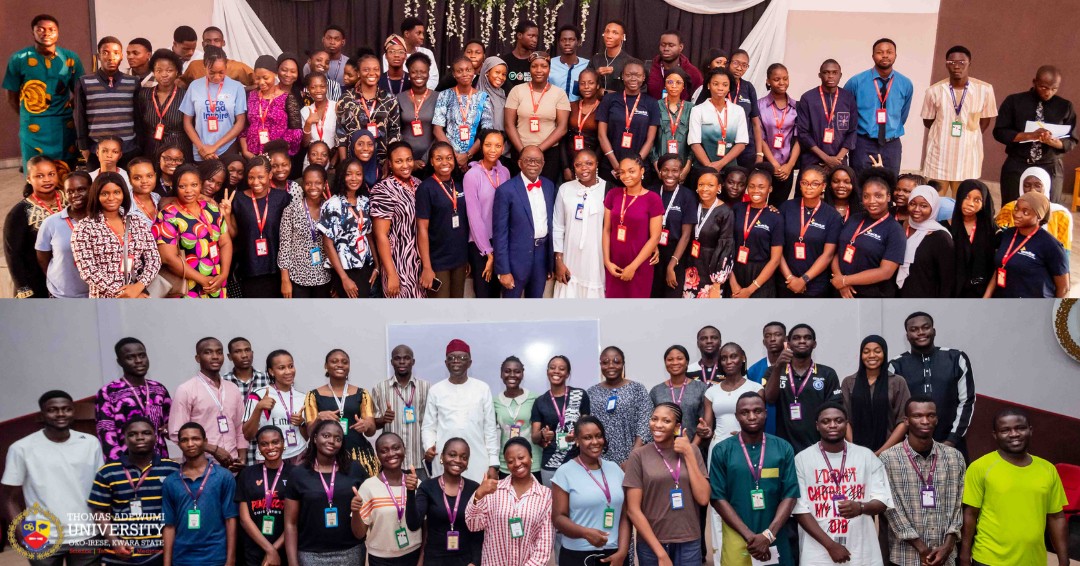
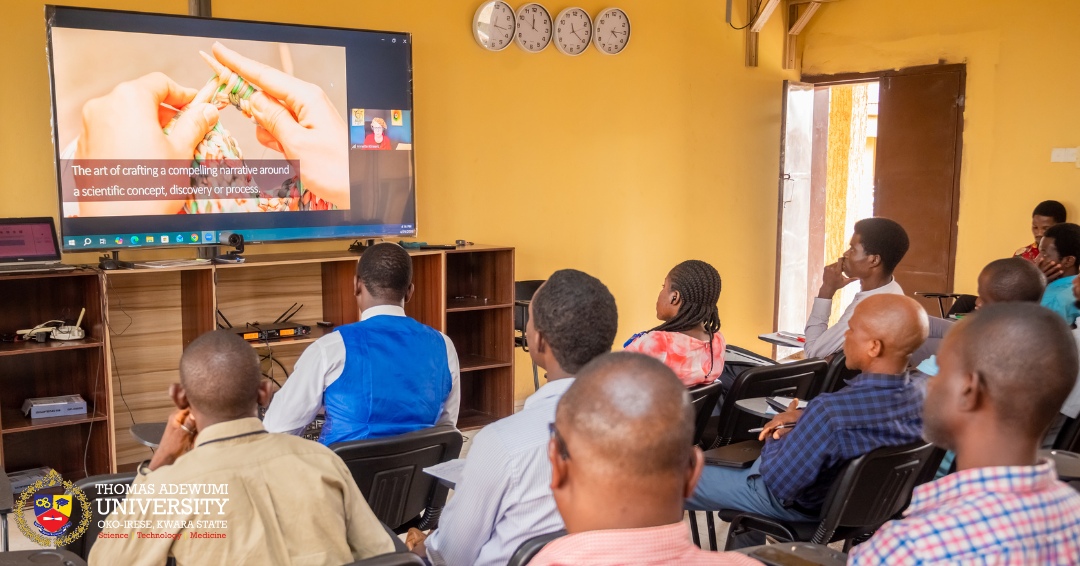
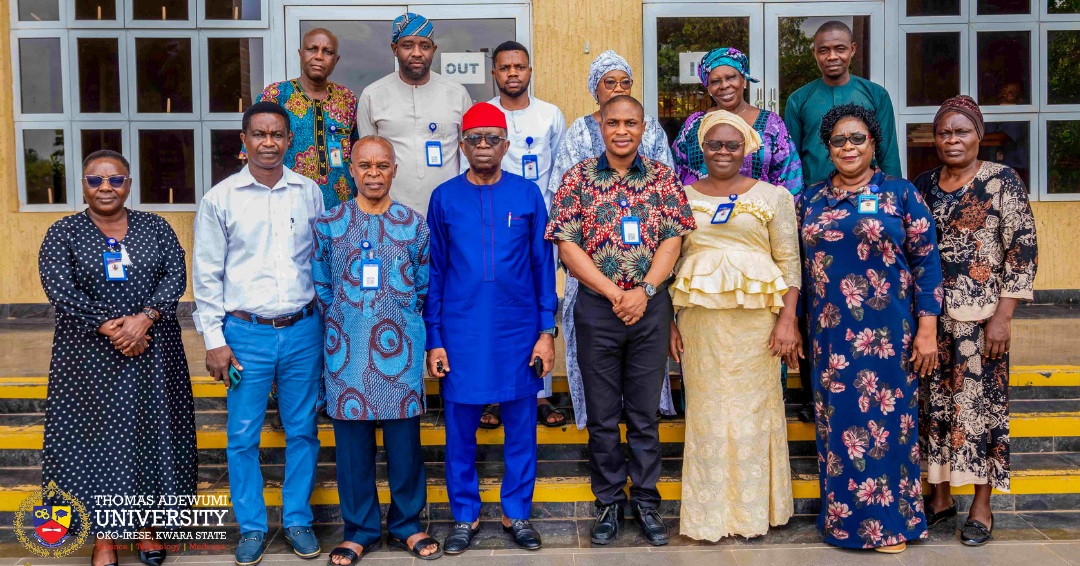
The Thomas Adewumi University Centre for Sustainability Science (TAU-CSS) has hosted its Maiden Sustainability Impact Series alongside the official inauguration of the TAU SDGs Advocacy Club at the University Auditorium, East Campus.
The landmark event, themed “Innovation and Technology for Sustainable Development,” brought together academics, development advocates, students, and sustainability enthusiasts to engage in meaningful conversations on the role of innovation and technology in addressing contemporary global challenges and advancing the Sustainable Development Goals (SDGs).
Delivering the welcome address, the Host and Coordinator of the Centre for Sustainability Science, Mr. David A. STEPHEN, welcomed guests, speakers, members of the university community, and participants to the inaugural edition of the Sustainability Impact Series, describing it as the unveiling of the Centre and a historic milestone for the institution.
Mr. Stephen explained that the establishment of the Centre for Sustainability Science was rooted in the recognition that the multifaceted challenges of the 21st century including environmental degradation, climate change, resource constraints, and socio-economic inequality require rigorous interdisciplinary research and evidence-based interventions.
According to him, the Sustainability Impact Series was envisioned as a scholarly platform designed to foster critical discourse, policy formulation, and community engagement “Sustainable development cannot be achieved through isolated disciplinary efforts. It requires an integrated approach that synthesizes insights from the natural sciences, social sciences, engineering, humanities, and life sciences,” he stated.
He expressed confidence that the intellectual contributions and discussions from the programme would provide practical solutions to societal and community challenges. He also appreciated the University Management for its unwavering support in establishing the Centre and creating an enabling environment for sustainability-driven initiatives. He further acknowledged external partners for their collaboration in addressing sustainability challenges.
Mr. Stephen reiterated the Centre’s commitment to fostering excellence in research, teaching, and community service in the field of sustainability science before officially welcoming participants once again.
Following the welcome address, the opening remarks were delivered by the Dean, Students Care Services, Dr. Grace P. DAFIEL, who represented the Vice-Chancellor, Professor Francisca O. OLADIPO.
Dr. Dafiel welcomed guests and participants to the programme and conveyed the Vice-Chancellor’s appreciation to the speakers and attendees for honouring the invitation to the maiden edition of the Sustainability Impact Series. She described the conversation as timely and essential, particularly in the context of Nigeria’s development priorities and the role universities must play in shaping innovative solutions to societal challenges.
“The theme of today’s programme goes to the heart of what universities must understand and embrace in this era,” she said. “We now have artificial intelligence and other emerging technologies that can be used to address sustainability issues.” According to her, Thomas Adewumi University remains committed to raising students who possess not only technical competence but also the mindset and capacity to develop impactful solutions.
“At TAU, our approach is simple; we train people who can build and provide solutions that matter. We equip students with the technical skills to innovate while ensuring that such innovations truly serve humanity,” she added. Dr. Dafiel emphasized that technology should expand opportunities and improve lives, noting that events such as the Sustainability Impact Series are important because no single institution can solve global sustainability problems alone.
She stressed the importance of collaboration among industries, practitioners, researchers, and institutions, adding that sustainable development requires collective effort and community-driven innovation. Encouraging students to maximize the opportunity, she urged them to broaden their understanding of innovation beyond inventions alone by embracing new partnerships, processes, and methods of delivering sustainable solutions.
“Every project and prototype should answer one question: who benefits?” she remarked while emphasizing impact-driven innovation and collaborative partnerships. She further noted that the Vice-Chancellor has consistently emphasized TAU’s vision as a university of impact through teaching, research, and community engagement aligned with the Sustainable Development Goals.
Addressing students directly, Dr. Dafiel encouraged them to ask questions, pursue innovative ideas, and develop projects capable of solving real-world problems. She concluded by appreciating the Coordinator of the Centre for Sustainability Science for organizing the programme and thanked the guest speakers for sharing their expertise and experiences with students.
The keynote address was delivered by the Dean, Faculty of Engineering, Thomas Adewumi University, Engr. Prof. Oladipupo S. OLADEJO, a renowned scholar and researcher in Civil Engineering with specialization in Water Resources and Environmental Engineering. Prof. Oladejo, who has built a distinguished academic and professional career focused on sustainable environmental solutions and engineering advancement, spoke extensively on the topic “Innovation and Technology for Sustainable Development.”
In his presentation, he highlighted the paradox of the modern era, where rapid technological advancement exists alongside severe environmental and social challenges such as climate change, resource depletion, rapid urbanization, and widening inequality. “We live in an era defined by paradox,” he stated. “The question then is: can innovation and technology bridge the gap between progress and sustainability? I believe yes — if actions are deliberate, inclusive, and intelligent.”
Prof. Oladejo explained the concept of sustainable development using the Brundtland Commission definition and further analyzed the framework of the 17 Sustainable Development Goals as actionable targets spanning poverty reduction, education, healthcare, clean energy, climate action, sustainable cities, gender equality, and partnerships. He noted that innovation creates value while technology transforms ideas into reality, adding that both remain critical drivers of sustainable development.
The engineering scholar also discussed transformative technologies such as artificial intelligence, renewable energy systems, smart infrastructure, and data-driven decision-making systems. Addressing global environmental concerns, he highlighted challenges including rising waste generation, pollution, greenhouse gas emissions, climate change, fossil fuel dependence, and sustainability issues affecting Africa and Nigeria.
Providing practical engineering perspectives, Prof. Oladejo identified solutions such as green energy innovation, waste management and circular economy systems, water resource sustainability, and resilient smart infrastructure. He also presented several Nigerian case studies on sustainability solutions, including waste-to-energy initiatives, rural electrification through solar mini-grids, urban flood management systems, and technology-driven innovation ecosystems.
Prof. Oladejo further showcased sustainability-related student initiatives at TAU, including research projects, sustainability platforms, solar farm initiatives, portal access tools, and the university’s Innoworks platform. Drawing from his research experience, he shared insights into green energy systems, waste-to-resource innovations, and smart environmental technologies.
In his concluding remarks, he emphasized that innovation and technology are tools for achieving a sustainable future and require coordinated efforts from engineers, policymakers, researchers, institutions, and citizens. “The challenge is great, but so is our capacity to innovate,” he stated. “Nigeria is not lacking in potential—only in coordinated action.”
The second speaker and guest speaker for the event, Mr. Emmanuel I. ODEYEMI, Kwara State SDGs Ambassador, delivered a thought-provoking presentation titled “Beyond Innovation Story: Make It Work.”
Mr. Odeyemi, a technopreneur, digital innovator, youth leader, and development advocate, spoke on the importance of transforming innovative ideas into practical community and economic development solutions. He described technology, innovation, and sustainability as interconnected tools for solving societal challenges and improving human development.
According to him, the Sustainable Development Goals represent a universal call to action aimed at ending poverty, protecting the planet, promoting peace, improving education and healthcare, encouraging economic growth, reducing inequality, and ensuring sustainable living for all. He stressed that ICT and emerging technologies remain major contributors to achieving the SDGs through improved communication, education, healthcare delivery, innovation, governance, and access to opportunities.
Encouraging students to take action rather than complain about societal issues, he charged youths to become active contributors to sustainable development. “You cannot isolate your ideas and inspire a generation,” he said. “The 2030 Agenda cannot be accomplished by words alone; action is required.”
Mr. Odeyemi encouraged students to begin sustainability efforts within their immediate communities by identifying local problems, aligning them with SDG goals, forming teams, engaging community leaders, and volunteering to create change. He also emphasized inclusion and equal opportunities for Persons With Disabilities (PWDs), noting that inclusivity remains central to the Sustainable Development Goals.
Highlighting several volunteer opportunities, he encouraged students to engage in community cleanups, digital literacy programmes, environmental sustainability projects, advocacy campaigns, charity drives, mentorship programmes, and health outreach activities. Speaking on partnerships, he noted that sustainable development cannot be achieved individually, stressing the importance of collaboration among governments, agencies, NGOs, private organizations, and civil society groups.
He urged students to take advantage of opportunities provided by the Office of the Senior Special Assistant to the Kwara State Governor on Sustainable Development Goals by presenting proposals and community development initiatives.
Another major highlight of the event was the official inauguration of the TAU SDGs Advocacy Club. The students were formally inaugurated into the club as part of efforts to deepen sustainability consciousness and community engagement among undergraduates.
Mr. Odeyemi encouraged the newly inaugurated members to remain committed to advocacy, collaboration, and impactful community service while championing the SDGs within and beyond the university community.
The event concluded with a vote of thanks delivered by the Host, Mr. David STEPHEN, who appreciated the guest speakers, university management, participants, and students for their presence and contributions to the success of the programme. He also encouraged students to actively participate in sustainability and SDG-related activities within their communities.
The Maiden Sustainability Impact Series and inauguration of the TAU SDGs Advocacy Club further positions Thomas Adewumi University as an institution committed to innovation, sustainability, interdisciplinary research, and community-driven development aligned with global best practices and the Sustainable Development Goals.